
William Laine, an American contemporary artist, has emerged as a distinctive voice in the realm of environmental art. Born in 1978 in London, Laine's passion for the natural world was evident from an early age, as he spent his childhood exploring the rugged landscapes of Britain.
His work involves a transformation of space to invoke sensory and emotional experiences that bridge the gap between the viewer and the natural world. He employs a bold use of color and organic forms to create large-scale experiential works, encouraging the viewer to reconsider their relationship with the environment.
Natural pigments, resins, and biodegradable substances
"Pollen from Hazelnut" presents a profound and immersive journey through the visionary environmental art of William Laine. This exhibition, housed within the serene walls of the Contemporary EcoArt Foundation, is a masterful exploration of the minuscule yet immensely impactful world of pollen, specifically that of the hazelnut tree, which serves as a microcosm for the artist's deep engagement with nature's intricate processes.
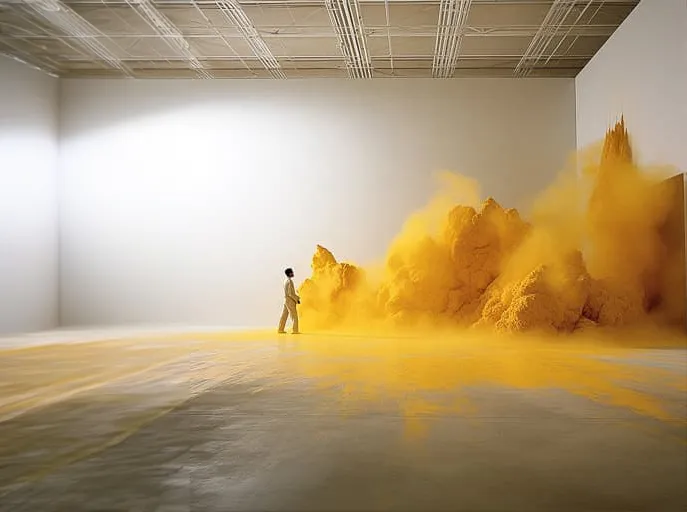
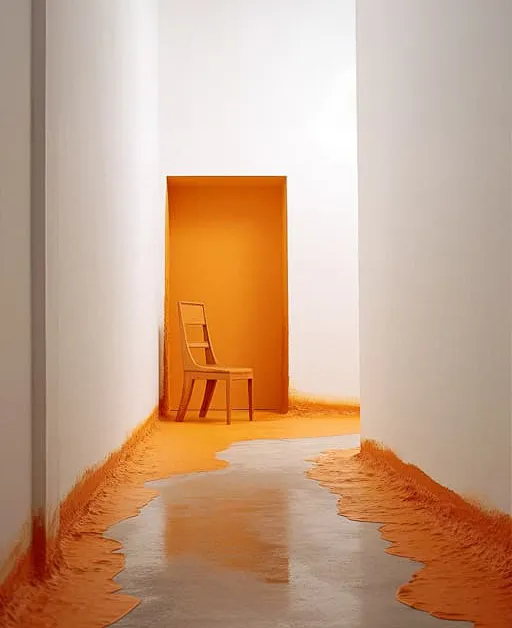
The exhibition begins with an installation that symbolizes the moment of pollination - an explosive and yet delicate genesis of life. Spectators enter a room transformed into a living tableau of vibrant golden hues, invoking the very essence of pollen grains being released into the atmosphere. The air itself carries a light hazelnut fragrance, subtly infusing the experience with olfactory sensations that transport the visitor to a springtime orchard.
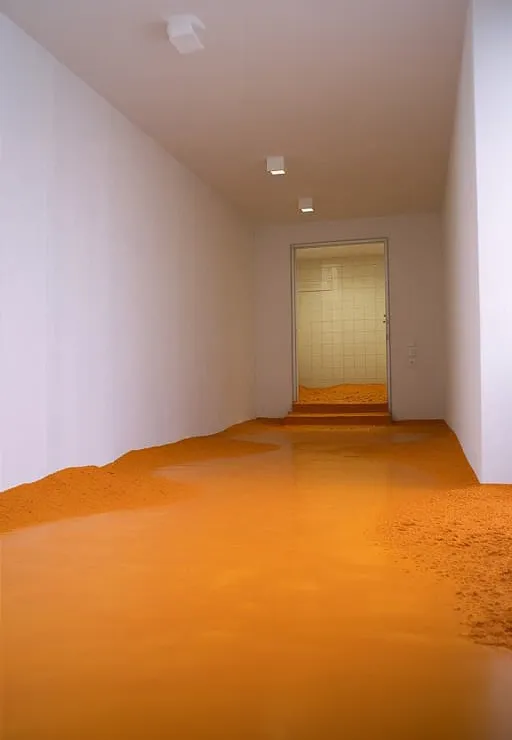
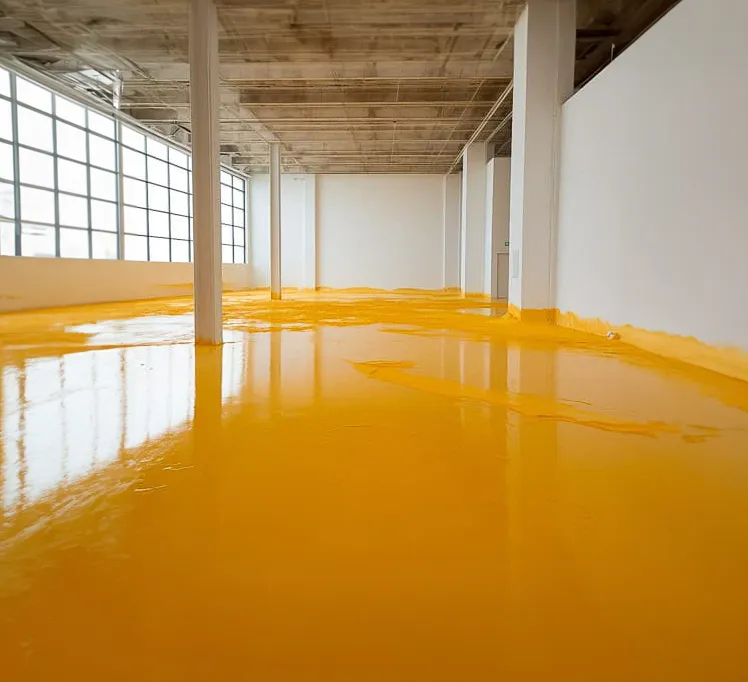
Moving through the gallery space, the audience encounters a large-scale floor installation that mirrors the dispersal of pollen by natural elements. The floor is awash with a brilliant golden pigment, its patterns ebbing and flowing like waves, simulating the ebbs and flows of nature’s own rhythms.
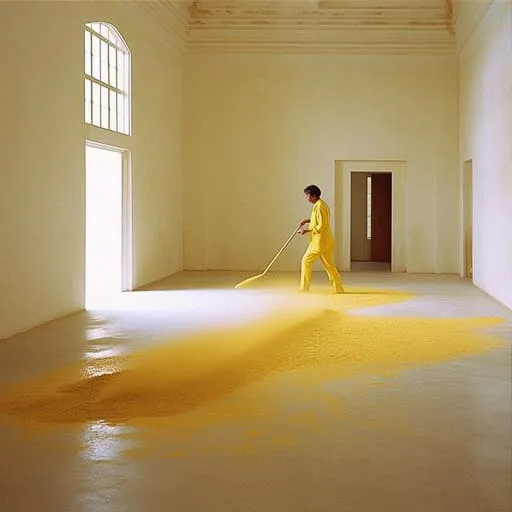
Next, the exhibition presents an interactive section that simulates the wind's role in pollination. This segment ingeniously uses motion-sensing technology to create air movements, stirring up the golden particles underfoot, engaging visitors in a dynamic dance that echoes the wind-borne journey of pollen.
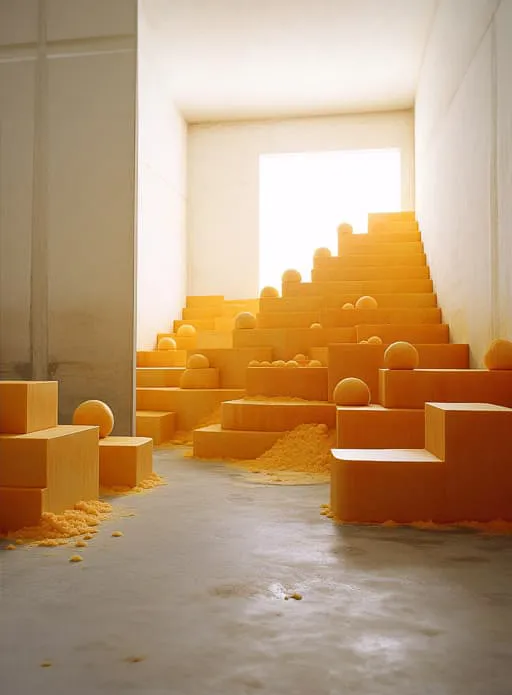
In a separate, dimly lit chamber, the focus shifts to the microscopic. Here, towering structures loom overhead, inspired by the magnified texture of a hazelnut pollen grain’s surface. These organic forms invite visitors to contemplate the complex surfaces that facilitate each grain's attachment to pollinators or to the stigmas of flowers.
